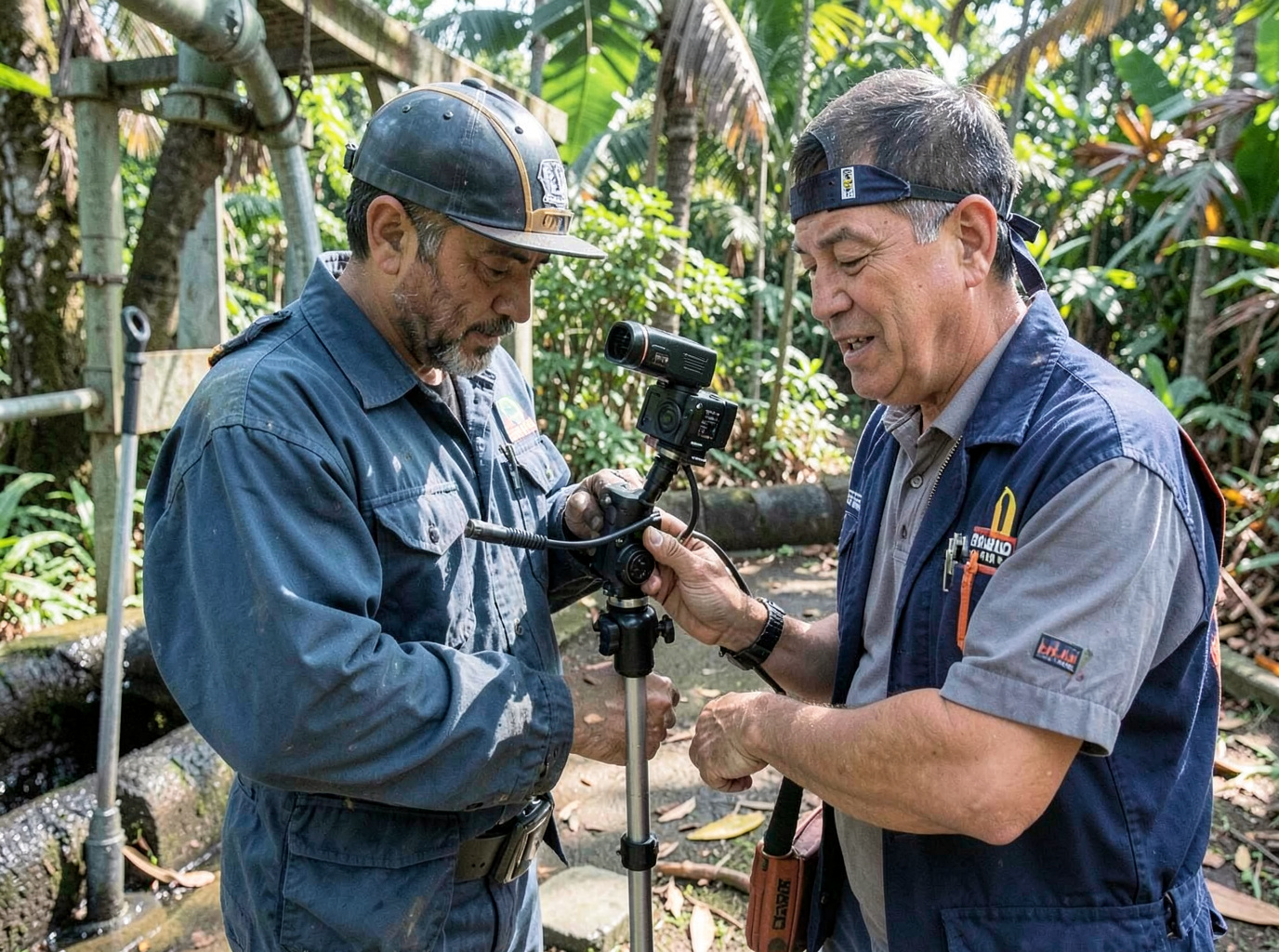
Hilo's tropical rainforest climate brings frequent heavy rain that saturates soil around older homes in Waiakea and Puueo, often shifting clay or cast-iron lines installed decades ago. A sewer camera inspection reveals root intrusion, offset joints, and standing water that surface cleaning misses, especially near Hilo Bay where high water tables push debris back into laterals. Technicians at 848 Manono St B run the camera from cleanouts or roof vents to map exact problem locations before any digging begins.
In Hawaii County neighborhoods like Downtown Hilo, many properties sit on uneven terrain sloping toward Rainbow Falls or Liliuokalani Gardens, creating low spots where grease and sediment collect. Camera footage shows whether a clog sits in the main line or a private lateral, preventing unnecessary excavation on sloped lots common in Puueo. This step also identifies cracked pipes before the next storm season sends more water through the system.
Nearby towns such as Pahoa and Keaau share similar volcanic soil and rainfall patterns that accelerate pipe corrosion, so Hilo crews often compare footage against known trouble spots in those areas. Inspections performed during business hours at 848 Manono St B give homeowners clear video they can review with plumbers before deciding on repairs.
Seasonal Guidance
Heavy winter rains in Hilo increase call volume for camera work because saturated ground lifts older lines in Waiakea yards. Scheduling an inspection before peak rainy months helps catch small offsets before they become backups near Hilo Bay properties.
Technician insight
In Hilo the thing that catches most people out with sewer camera inspection is how fast rain saturates the volcanic soil around older Waiakea homes and lifts joints that looked fine during dry spells.
Waiakea backup after heavy rain
A homeowner in Waiakea reported slow drains following several days of rain near Liliuokalani Gardens. Camera insertion from the side cleanout showed a root mass and one offset joint 28 feet from the house. The crew cleared the roots on site and marked the offset for targeted repair, restoring flow without digging up the entire yard.
Sewer Camera Inspection Services We Offer
✓Main Line Camera Inspection
Run a camera through the primary sewer line from the cleanout to the street connection to locate roots or collapses affecting Downtown Hilo homes.
✓Lateral Line Inspection
Inspect the private sewer lateral from the house to the main in Waiakea and Puueo where tree roots from Liliuokalani Gardens frequently intrude.
✓Pre-Purchase Sewer Scan
Provide video documentation of pipe condition for buyers checking older properties near Rainbow Falls before closing.
✓Post-Storm Line Check
Check for debris and shifted joints after heavy rain events common in Hilo County that push material into lines from Hilo Bay.
✓Commercial Drain Camera Survey
Map larger diameter lines serving businesses in Downtown Hilo where grease buildup combines with frequent rainfall runoff.
Sewer Camera Inspection Cost in HI
| Service | Typical Range | What Affects It |
|---|---|---|
| Standard residential inspection | $250–$350 | Single cleanout access in Waiakea or Puueo homes under 3,000 sq ft |
| Longer lateral or multiple lines | $350–$450 | Properties near Hilo Bay or sloped lots requiring extra footage |
| Commercial or multi-unit survey | $400–$600 | Larger lines in Downtown Hilo businesses after hours or on Saturday |
Ranges are typical for HI and confirmed with an exact written quote before any work starts.
How it works
- 1
Locate Access Point
Identify the nearest cleanout or roof vent on the property in neighborhoods like Waiakea.
- 2
Insert Camera Head
Feed the waterproof camera into the line while monitoring live footage for blockages or damage.
- 3
Record And Map Findings
Note exact distances and conditions, then review video with the homeowner on site.
- 4
Recommend Next Steps
Explain whether hydro jetting, repair, or replacement is needed based on the inspection.
Pricing
Most sewer camera inspections in Hilo fall between $250 and $450 depending on access difficulty and line length.